Maya Is Pardoned and Appointed to Assist the Queen
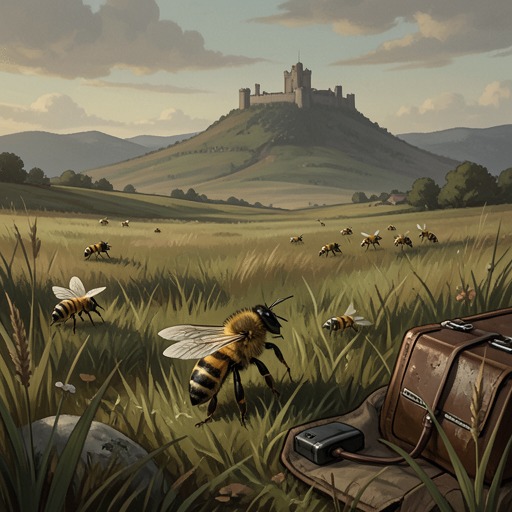
The Adventures of Maya the BeeMaya Is Pardoned and Appointed to Assist the Queen is the closing reckoning of Maya’s return to her people: the bee who left the hive in search of experience is welcomed back after using that experience to help save the Nation of Bees. Queen Helen VIII’s decision both answers Maya’s plea for forgiveness and gives her knowledge gained beyond the colony a place in its future government.
Return and the Question of Loyalty
Maya’s return is shaped by two competing obligations. In the Hornet fortress, the sentinel charged with guarding her explains that his people and queen have entrusted him with power, and that his orders forbid any bee who has entered the fortress from leaving alive. He understands his duty as fidelity to his own people, even while Maya is desperate to warn hers. The scene makes clear that the conflict is not simply between a loyal bee and a disloyal enemy: both characters are bound by communal allegiance, though their duties demand opposite outcomes.
Maya finds a way through that impasse by appealing to the sentinel’s longing for Loveydear. She promises to tell him where Loveydear lives in exchange for his freedom, and he asks whether she will keep her word. Maya gives him the information: Loveydear lives among the rushes near the waterlilies, in a cove at the south end of the lake, and can be found there at noon. Recognizing the place from Loveydear’s description of the floating white flowers, the sentinel steps aside and lets Maya go. This bargain matters to the later pardon because Maya reaches home not by abandoning her concern for her people, but through a promise that also honors the enemy guard’s hope.
A Dangerous Homecoming
Even after escaping the fortress, Maya must still get through the entrance to her own city. Two sentinels stop her at the flying-board, and she is too breathless to explain herself. Their resistance reflects the seriousness of the entry rule: forcing a way into another bee-city without the queen’s consent is a capital offense. Maya gets past the misunderstanding by pronouncing the password known to the bees, whereupon the sentinels release her. Her return therefore begins under suspicion and legal risk, not with an immediate welcome.
The danger she has brought back is greater than her personal predicament. At the Hornet fortress, a messenger had carried a white jasmine petal as a signal and an offer: the Hornets would leave the bees in peace if their prisoners were surrendered. Queen Helen VIII’s answer rejects the demand, stating that there are no prisoners and that the invaders are dead; she also declares that the bees are ready to keep fighting. The hornet leader weighs his warriors’ desire for revenge against reason. By the time Maya reaches her people, the confrontation has ended in victory, but the solemn court and the missing officers make the cost of that victory visible.
The Queen’s Hearing and Pardon
A messenger summons Maya to the royal reception room, where the full court has assembled. Her legs shake, and she scarcely dares to raise her eyes before the queen and the dignitaries. The assembly is unusually solemn, yet its members also show the exaltation of a people conscious of having won a new glory. The Queen herself crosses the room unattended, takes Maya in her arms, and gives her a welcome Maya had not expected. Overwhelmed, Maya breaks down and weeps; the bees share her happiness and gratitude for her brave deed.
The court wants to know how Maya learned of the Hornets’ plans and escaped a prison from which no bee had escaped before. She tells the story of what she has seen and heard, including Loveydear, the grasshopper, Thekla, Puck, and Bobbie, who rescued her. She also recounts the flower sprite and the human beings. That last part holds the room in such attentive silence that the hive’s wax-generators can be heard kneading wax in the background. The account makes her adventures more than private memories: the court hears how the world outside the hive supplied the knowledge and encounters that eventually enabled her to serve her people.
At the end, Maya asks Queen Helen VIII’s pardon for running away. The response is not a formal trial or a punishment but an embrace and an explanation of the Queen’s judgment. Maya had not forgotten her home or her people; in her heart, the Queen says, she had remained loyal. The Queen accordingly promises loyalty in return and appoints Maya to stay by her side and help conduct the affairs of state. Her experience and learning, acquired during her absence, are to serve the good of her people and country. The court greets the decision with cheers.
Service and Lasting Significance
The appointment changes the meaning of Maya’s departure. Her flight from the hive is not treated as irrelevant, but neither is it allowed to define her permanently: the Queen distinguishes leaving from ceasing to be loyal. The pardon rests on the demonstrated purpose and consequence of Maya’s return, while the new office makes her adventures useful to the community she once left. In this way, private exploration becomes civic knowledge, and reconciliation leads directly to responsibility.
The ending briefly records the consequences of that responsibility. Maya’s work is said to contribute greatly to the welfare of the Nation of Bees, and she becomes respected and loved by her people. She also visits Cassandra, who now lives on pension honey, for conversations on quiet evenings. There Maya tells young bees about the adventures they have followed with her. The episode thus closes not only with a political appointment but with a continuing act of transmission: Maya’s experience becomes part of what the next generation can hear and learn.